
Wayllabamba: The First Campsite on the Inca Trail, Inside a Living Community
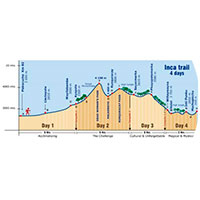
After crossing the Cusichaca Valley and leaving Llactapata and Tarayoc behind, the Inca Trail 4 days reaches Wayllabamba: the trail's first official campsite and, of all the ones used along the trek, the only one located inside an active Andean community. This is where the first day of walking ends, and where preparation begins for the toughest day of the route.
What Is Wayllabamba?
Wayllabamba is, first and foremost, a village — the only active community within which a campsite is set up along the entire classic Inca Trail. Located where the Llulluchayoc and Cusichaca rivers meet, this settlement marks the natural end of the trek's first stage, after roughly 12 km of fairly accessible walking that serves as acclimatization before the real physical challenge of the following day.
Unlike the higher, more isolated campsites that come later, at Wayllabamba it's common to cross paths with local residents walking the trails around the campground, and to find small shops where you can stock up on snacks, drinks, or basic supplies before continuing.
The Walk to Get Here
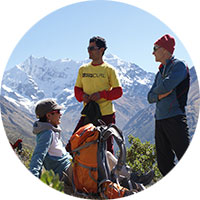
Reaching Wayllabamba means passing through some of the most varied scenery of Day 1: montane forest with orchids and bromeliads in the more humid stretches, crossings of the Cusichaca River over wood and stone bridges, and views that shift between the agricultural valley and the snow-capped peaks framing the horizon, including the striking Verónica mountain (W'akay Willca).
Along the way, the trail passes through Llactapata, the major archaeological site of Day 1, and Tarayoc, the usual lunch stop. In that sense, Wayllabamba is the logical endpoint of a day designed as a gentle introduction to the rest of the route.
Vegetation and Surroundings
The campsite is surrounded by montane forest vegetation, with eucalyptus, alder trees, and high-altitude shrubs. It's a noticeably greener, more humid landscape than the dry valley covered hours earlier — a transition that hints at the ecosystem changes that will define the days ahead on the Inca Trail.
What to Expect at Camp
The afternoon at Wayllabamba tends to be calm and practical: it's the ideal time to check your gear, make sure your sleeping bag is easy to reach, and get mentally ready for the next day, since the climb toward the Warmiwañusca pass — the highest point on the entire Inca Trail, at 4,215 m (13,828 ft) — begins just a few hours after waking up. Many guides use the evening to give a briefing on the day's pace, rest points, and the signs of altitude sickness to watch for.
Staying well hydrated through the afternoon and night at Wayllabamba is one of the simplest, most effective things you can do to perform better the next day.
Wayllabamba or Ayapata: The Other First-Night Option
Not every agency camps at Wayllabamba. Many continue on to Ayapata, a campsite set at a higher elevation (3,300 m / 10,827 ft), which redistributes the effort differently between Day 1 and Day 2. Wayllabamba tends to feel like a gentler start to the mountain camping experience; Ayapata, on the other hand, gets hikers a bit closer to the next day's challenge before they turn in for the night.
Location and How to Get There
Wayllabamba sits in the Ollantaytambo district, at the confluence of the Llulluchayoc and Cusichaca rivers, along the opening stretch of the classic Inca Trail. There's no vehicle access: it can only be reached on foot from kilometer 82, following the route that passes through Llactapata and Tarayoc.
Reference location of Wayllabamba, confluence of the Llulluchayoc and Cusichaca rivers, Cusco.
Other Stops Near Wayllabamba
Tarayoc
The hamlet where the lunch stop takes place, shortly before reaching Wayllabamba.
Llactapata (Patallacta)
The large agricultural and administrative citadel crossed during the first part of Day 1.
Ayapata
The alternate, higher-elevation campsite chosen by some agencies instead of Wayllabamba.
Spend Your First Night at Wayllabamba on the Inca Trail
Wayllabamba marks the end of the trek's most accessible day and the lead-up to the Warmiwañusca challenge. Check out the full itinerary, available dates, and everything included in our classic Inca Trail tour.