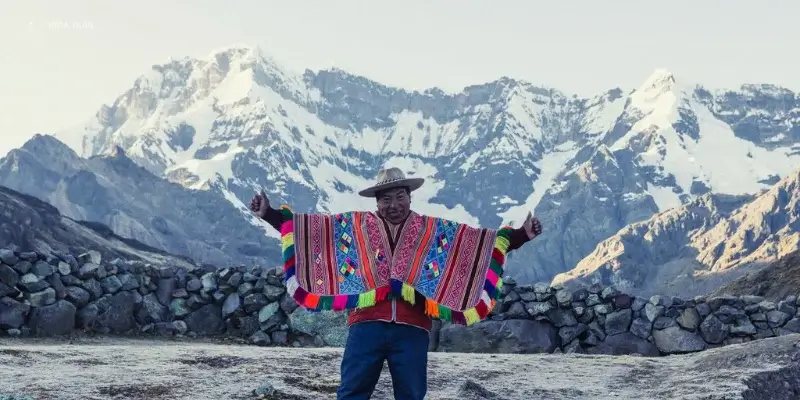
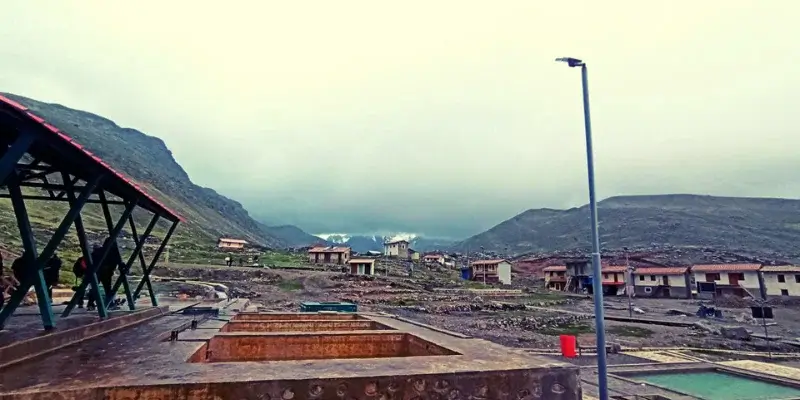
The Ausangate Trek represents one of the most breathtaking and spiritually significant trekking experiences in Peru. Known as Awsanqati in the native Quechua language of the Incas, this majestic mountain stands at 6,372 meters (20,905 feet) above sea level, making it the fifth-highest peak in Peru and the most revered Apu (mountain deity) in the Cusco region.
The 4-days Ausangate circuit forms part of the legendary Qhapaq Ñan, the extensive Inca trail network that once integrated the vast Tahuantinsuyo Empire. This remarkable system of over 23,000 kilometers connected four regions spanning from Colombia to northern Argentina, crossing through Ecuador, Peru, Bolivia, central Chile, and western Brazil. According to Peruvian historian José Antonio del Busto and numerous scholars, these trails represented one of the wonders of the Inca civilization, particularly after Inca Huayna Cápac expanded the network to rapidly mobilize his armies.
The ancient roads varied significantly in quality and dimensions depending on the terrain. Along the coast, they could reach 6 to 8 meters in width, while in the mountains, the stone-paved paths narrowed to barely one meter wide, boldly ascending the steep Andean slopes with remarkable engineering precision.
The Ausangate Trek adventure begins early with pickup from your hotel in Cusco. The journey in private transport follows the route toward Puno, passing through important historical sites including the Wari archaeological remains at Pikillacta and the colonial churches of Andahuaylillas and Huaro, the latter known as the "Sistine Chapel of America" for its impressive baroque murals.
As we ascend, the landscape gradually transforms from agricultural valleys to the high Andean puna, where small villages of shepherds and weavers dot the hillsides. By afternoon, the majestic Vilcanota mountain range emerges on the horizon, with Apu Ausangate and Qolqe Cruz dominating the panorama.
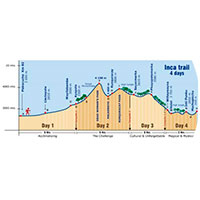
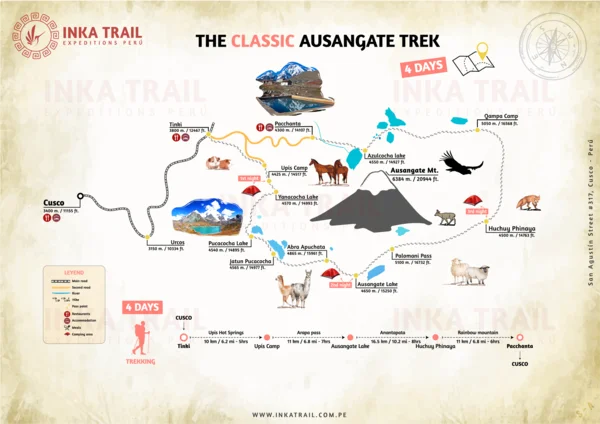
We arrive at Tinki - Upis (3,800 masl), the official starting point of the 4-days Ausangate trek. From here, we begin hiking across the Andean highlands, gradually approaching the imposing base of the mountain. The trail winds through traditional villages where communities keep their ancestral customs alive.
The first campsite is established at Upis (4,250 masl), a location blessed with natural hot springs. After a day of hiking and adapting to the Ausangate altitude, immersing in these natural pools of hot water is a revitalizing experience that prepares the body for the challenges ahead.
The second day of the Ausangate Trek begins with a progressive ascent up the Andean slopes. We cross our first significant pass at 4,500 meters altitude, from where views of the surrounding landscape become increasingly impressive. This steady climb allows trekkers to continue acclimatizing to the increasing Ausangate altitude.
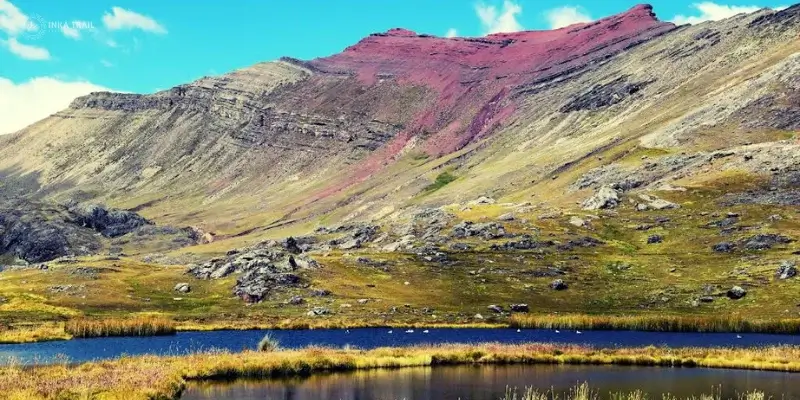
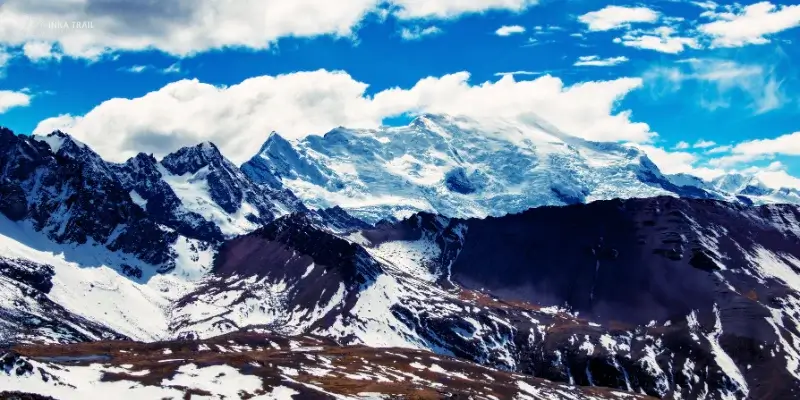
We descend toward Pucacocha lagoon, where we'll enjoy lunch surrounded by a dreamlike setting. This is one of the famous 7 lagoons of Ausangate, characterized by its reddish waters due to minerals present in the terrain. From this point, the view of the ice fall on the western wall of Apu Ausangate is absolutely spectacular, with suspended glaciers that seem to defy gravity.
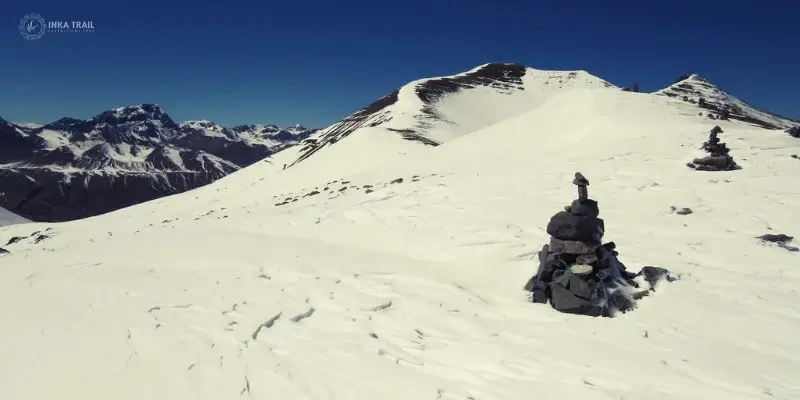
After lunch, we continue toward the Apacheta Pass at 4,700 meters, a sacred place where hikers traditionally leave stone offerings to the Apu Ausangate. From the summit of the pass, privileged views of the turquoise lagoons dotting the valley can be obtained.
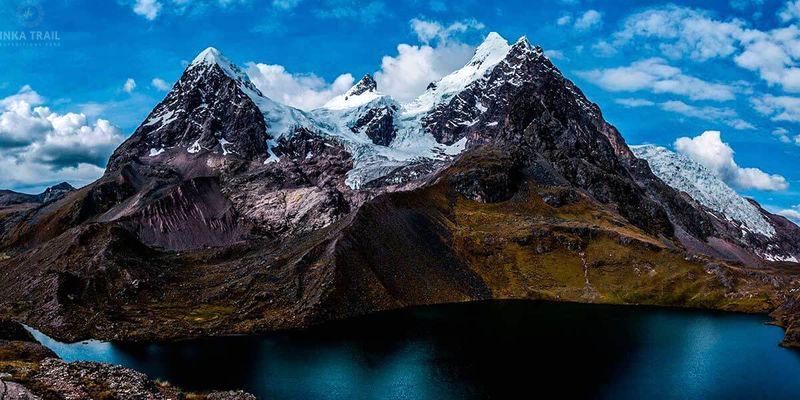
The evening campsite is established near Ausangate Cocha lagoon, surrounded by the dominating presence of the snow-capped peak. From here, one understands why this mountain has received such veneration for centuries: its imposing mass, the glaciers shining under the sunset light, and the sacred silence of the place create an atmosphere of profound spiritual connection.
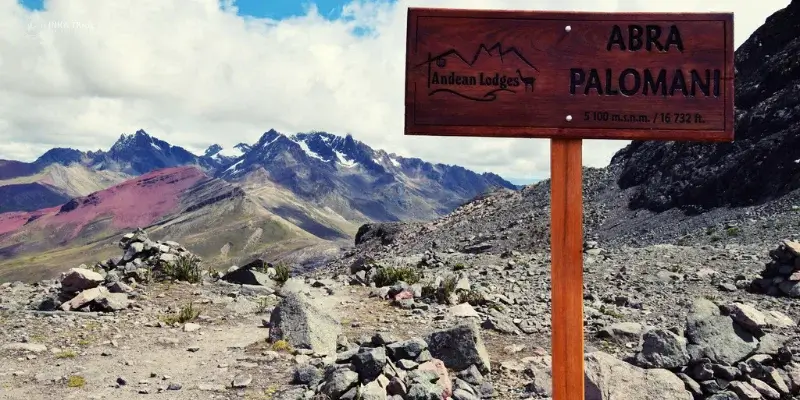
The third day of the 4-days Ausangate circuit presents the greatest challenge: the ascent to Palomani Pass, the highest point of the trek at 5,200 meters above sea level. This is a demanding day requiring a steady, measured pace, adapting to the extreme Ausangate altitude and the reduced available oxygen.
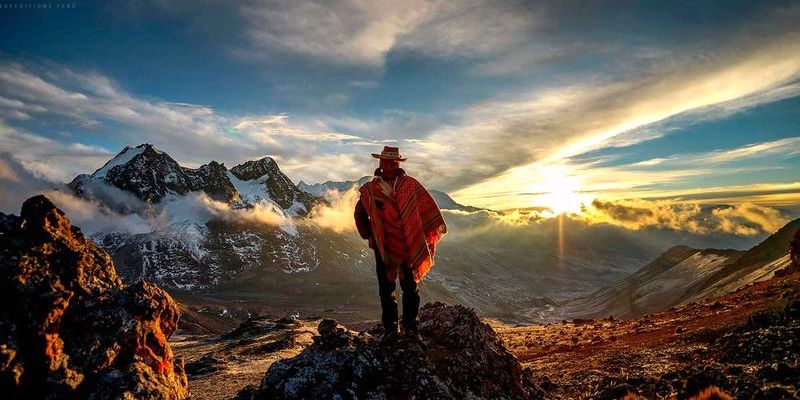
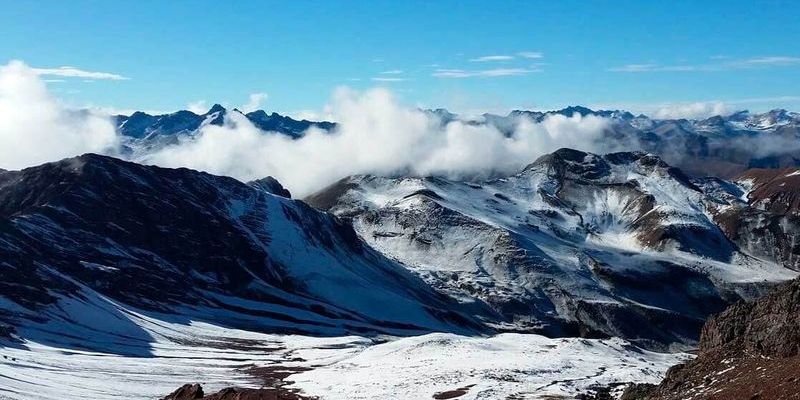
The effort is amply rewarded with spectacular 360-degree views. From the summit of Palomani Pass, the majestic southeastern ridge of Apu Ausangate can be appreciated in all its splendor, with its glaciers, seracs, and vertical ice walls. Other sacred mountains of the Vilcanota range are also visible, including Qolqe Cruz and numerous unnamed peaks extending to the horizon.
On clear days, this is one of the best locations to observe the Andean condor, the largest flying bird in the world, which uses thermal currents to glide over these deep valleys in search of food. The high Ausangate altitude makes this an ideal habitat for these magnificent birds.
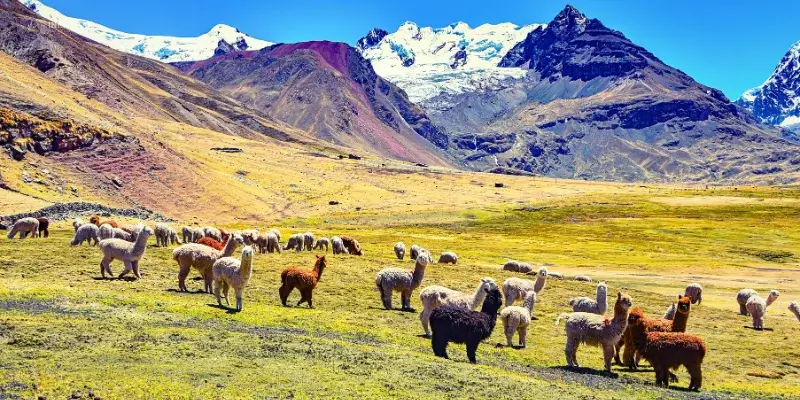
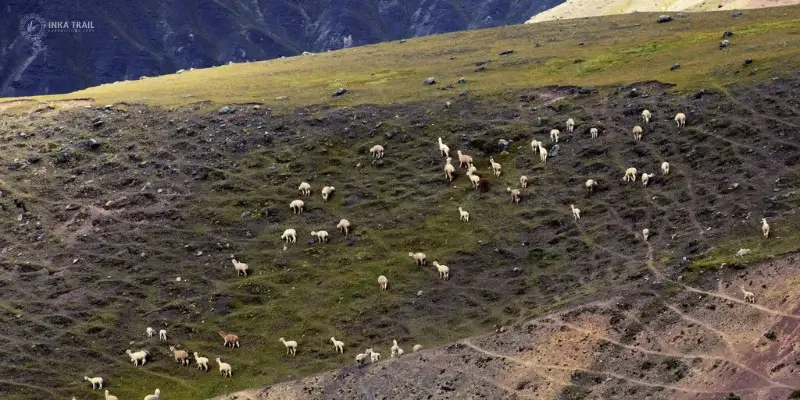
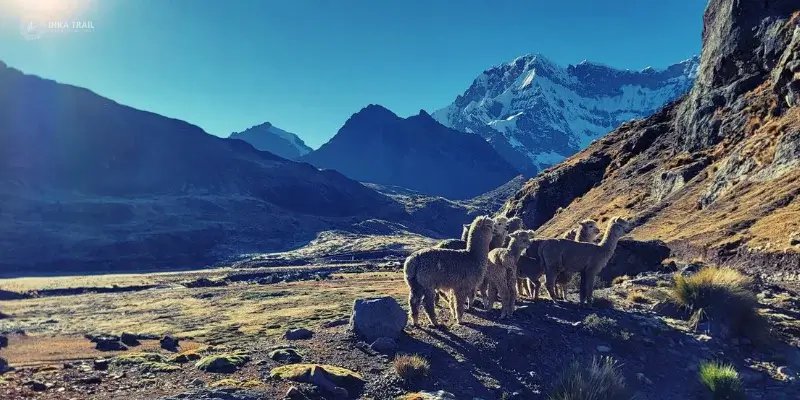
After absorbing the panoramic views, we begin the descent toward our campsite at Soraycucho (Huchuy Phinaya), located in a sheltered valley. During the descent, it's common to spot herds of alpacas, llamas, and vicuñas in their natural habitat, peacefully grazing on the ichu grasslands.
The final day of the Ausangate Trek 4 days begins by turning northwest. The trail passes alongside Ticllacocha lagoon, another of the 7 lagoons of Ausangate, whose waters reflect the surrounding peaks creating memorable photographic compositions.
We ascend to the last pass of the circuit at 4,650 meters, which leads us toward the small Pacchaspata meadow or the shores of Q'omercocha lagoon, depending on the specific route the guide takes according to weather conditions. This will be our lunch point, the last meal prepared by our mountain chef.
During the final day's journey, we traverse deep valleys where Andean wildlife presents itself in all its diversity. Herds of alpacas and llamas are constant companions along the path, and with luck, we may observe the majestic flight of the Andean condor soaring through the skies.
The trail gradually descends toward the village of Pacchanta (4,100 masl), famous for its natural hot springs. Enthusiastic hikers have the option to immerse themselves one last time in these therapeutic pools before bidding farewell to Apu Ausangate.
After lunch in Pacchanta, we board our private transport for the return journey to Cusco, completing the full circuit around the sacred mountain. The return journey offers time to reflect on the lived experience and the indelible images that will remain engraved in memory.
About Ausangate Campsites: Campsites may change (be different from this itinerary) depending on booking time and availability, weather conditions or on restrictions undertaken for safety reasons by the Peruvian Government.
The Ausangate Trek 4 days offers an unparalleled experience combining adventure, ancient culture, and otherworldly landscapes. During this journey, trekkers will have the opportunity to experience multiple highlights that make this one of South America's premier high-altitude adventures.
Circumnavigate the imposing Apu Ausangate, witnessing its hanging glaciers and ice walls that have been venerated for centuries by local populations. The Ausangate altitude and its commanding presence on the horizon accompany every step of the route, constantly reminding trekkers of the magnitude of this sacred mountain.
Discover the famous 7 lagoons of Ausangate, natural jewels of turquoise, emerald, and deep blue waters that reflect the surrounding snow-capped peaks. These lagoons include Pucacocha, Ausangate Cocha, Q'omercocha, and Ticllacocha, each with its own unique personality and stunning beauty. The 7 lagoons of Ausangate have become one of the circuit's main attractions, offering spectacular photographic opportunities.
Experience the living culture of Andean communities that maintain millennia-old traditions of herding, weaving, and Inca cosmovision. The villages of Tinki, Upis, and Pacchanta preserve ancestral customs and consider the Apu Ausangate as their spiritual protector.
Cross high mountain passes exceeding 5,000 meters in altitude, including the challenging Palomani Pass at 5,200 meters, from where 360-degree panoramic views of the Vilcanota mountain range can be appreciated. Understanding the Ausangate altitude and proper acclimatization is essential for safely enjoying these elevated viewpoints.
Clothing (layering system):
Footwear:
Essential equipment:
Documents and other items:
Choosing the right season to undertake the 4-days Ausangate trek is crucial for maximizing the experience around the sacred mountain. Weather conditions significantly affect visibility of Apu Ausangate and the 7 lagoons of Ausangate, as well as overall trekking comfort.
Dry season (May to September): This is the most popular and recommended time for the Ausangate Trek. Days are mostly sunny with clear skies, offering the best views of the snow-capped Ausangate peak and the 7 lagoons of Ausangate. Daytime temperatures are pleasant (10-15°C / 50-59°F), though nights are extremely cold, potentially dropping to -15°C (5°F) at higher elevation campsites. June and July are the coldest months but also the driest, with minimal precipitation.
The dry season provides optimal conditions for dealing with the challenging Ausangate altitude. Clear weather means better visibility for navigation and photography, while stable conditions reduce risks associated with crossing high passes. However, this is also the busiest season, so expect to encounter other trekking groups, especially at popular campsites near the 7 lagoons of Ausangate.
Rainy season (November to March): During these months, precipitation is frequent, especially in afternoons. Trails can become muddy and slippery, and clouds may obscure views of Apu Ausangate. However, the landscape becomes intensely green and the 7 lagoons of Ausangate are at their maximum water levels, creating stunning reflections. This season is ideal for those seeking greater solitude on the trail and don't mind more challenging conditions.
The combination of rain and Ausangate altitude can make the trek significantly more demanding. Snow may fall at higher elevations, and passes can become treacherous. Only experienced trekkers with proper equipment should consider the rainy season, but the rewards include pristine landscapes and an authentic wilderness experience.
Shoulder season (April and October): These months offer an interesting balance. April marks the end of the rainy season, with landscapes still green but more stable weather. October is the beginning of the rainy season, with warmer temperatures but possibility of occasional precipitation. Both months can provide excellent conditions with fewer crowds, though weather is less predictable than the dry season.
A special event is the Qoyllur Rit'i pilgrimage, celebrated in May or June (variable date according to the Catholic calendar). If you coincide with this festival, you'll experience a unique cultural dimension as thousands of pilgrims honor Apu Ausangate. However, trails and campsites will be significantly more crowded during this period.
The Ausangate Trek 4 days is considered moderate to challenging in difficulty. It requires good physical condition due to long hiking days (5-8 hours daily) and the considerable Ausangate altitude that makes every step more demanding than at lower elevations.
It's recommended to begin a physical preparation program at least 6-8 weeks before the trip, including:
Remember that even fit individuals can struggle with the Ausangate altitude. Physical fitness helps, but proper acclimatization is ultimately more important for success on this high-elevation trek.
Given the elevated Ausangate altitude and passes exceeding 5,000 meters, proper acclimatization is absolutely fundamental for safety and enjoyment. Altitude sickness can affect anyone regardless of fitness level, and the extreme elevations of the 4-days Ausangate trek demand respect and preparation.
Essential acclimatization strategies include:
The extreme Ausangate altitude means even small tasks require more effort. Listen to your body, don't push beyond your limits, and remember that reaching the highest pass is optional if you're struggling with altitude. Your guide can arrange alternatives if needed.
Understanding the Ausangate altitude and elevations throughout the circuit is fundamental for proper preparation and acclimatization. The trek operates at extreme elevations that require respect and careful planning.
Given the considerable Ausangate altitude and mountain passes, it is strongly recommended to spend at least 2-3 days in Cusco (3,400 masl / 11,155 feet) before starting the trek to allow for adequate acclimatization. Altitude sickness symptoms can include headache, nausea, fatigue, and difficulty sleeping. Staying well hydrated, walking at a measured pace, and consuming coca tea are effective strategies for managing the altitude.
The Ausangate altitude presents unique challenges that differ from lower-elevation treks. At over 5,000 meters, the available oxygen is approximately 50 percent of what's available at sea level. This makes even simple tasks more demanding and requires trekkers to maintain a slow, steady pace known in mountaineering circles as the "pressure breathing" technique.
While the name "7 lagoons of Ausangate" has become popularized, the complete circuit around Apu Ausangate offers views of numerous lagoons, each with unique characteristics that make them memorable highlights of the trek.
Pucacocha Lagoon: Its name means "red lagoon" in Quechua, referring to the reddish color of its waters caused by high concentrations of iron minerals. This is one of the first significant lagoons encountered on the 4-days Ausangate trek, located at approximately 4,650 meters altitude. The contrast between the red waters and the white glaciers of Apu Ausangate creates a striking visual composition.
Ausangate Cocha Lagoon: The principal lagoon located at the feet of the snow-capped Ausangate mountain. Its turquoise waters reflect the glaciers and ice walls of the peak, creating one of the most photographed scenes of the trek. This is where many trekkers feel the strongest spiritual connection to the Apu Ausangate, camping beside its pristine waters while the mountain towers overhead.
Q'omercocha Lagoon: An emerald-green water lagoon situated in a protected valley, surrounded by meadows where alpacas and llamas graze. The lagoon sits at approximately 4,500 meters and is often used as a lunch spot, allowing trekkers to rest while enjoying views of multiple peaks in the Vilcanota range.
Ticllacocha Lagoon: Located in the northern part of the circuit, this lagoon is less visited but equally beautiful, with crystalline waters that perfectly reflect the Andean sky. It marks one of the final highlights before descending toward Pacchanta on the last day of the trek.
The 7 lagoons of Ausangate have become an iconic attraction of the circuit, though it's important to note that the exact number of visible lagoons can vary depending on the specific route, time of year, and weather conditions. Some alternative routes visit additional lagoons such as Azulcocha and Comercocha, potentially increasing the count beyond seven.
Each of the 7 lagoons of Ausangate sits at a different Ausangate altitude, ranging from approximately 4,400 to 4,900 meters. This variation in elevation, combined with different mineral compositions in the surrounding rocks, creates the spectacular array of colors from deep red to brilliant turquoise that makes these high-altitude lakes so remarkable.
To truly understand the experience of the Ausangate Trek 4 days, it's essential to know the profound spiritual meaning of Apu Ausangate in Andean cosmovision. This sacred mountain is not merely a geological formation but a living deity that plays a central role in the beliefs and practices of indigenous communities.
In Quechua tradition, Apus are protective spirits inhabiting the highest and most sacred mountains. The Apu Ausangate is considered the most powerful in the Cusco region, venerated as a provider of water, protector of herds, and guardian of communities living at its feet. The mountain's imposing Ausangate altitude reinforces its status as the supreme Apu, standing above all others in the region.
Every year, days before the Corpus Christi celebration (May or June), the Qoyllur Rit'i pilgrimage takes place, one of the largest religious events in South America. Thousands of pilgrims ascend toward Apu Ausangate in a display of devotion that fuses Catholic beliefs with ancestral Andean traditions. This festival demonstrates the living connection between local communities and the sacred mountain.
During the 4-days Ausangate trek, it's common to observe apachetas (stone cairns) at mountain passes, where hikers and local residents leave offerings to Apu Ausangate as a sign of respect and gratitude. These spiritual practices remain alive among shepherd communities who live in harmony with the mountain, following traditions passed down through countless generations.
The indigenous people believe that Apu Ausangate controls the weather, determines the success of harvests, and protects travelers crossing its domain. The mountain's glaciers are seen as sacred sources of water that sustain all life in the valleys below. As climate change affects these glaciers, the relationship between the communities and their protective Apu becomes even more poignant.
Respect toward Apu Ausangate should be constant throughout the entire trek. Local guides often perform small ceremonies of gratitude before starting the hike, a tradition that invites visitors to connect with the sacred dimension of the place beyond simple physical adventure. Participating in or respectfully observing these rituals adds profound meaning to the trekking experience.
The ecosystem surrounding the Ausangate Trek 4 days is remarkably diverse despite the harsh conditions imposed by extreme Ausangate altitude. The region supports unique Andean flora and fauna adapted to life above 4,000 meters.
Mammals: The highlands around Apu Ausangate are home to South American camelids including domesticated alpacas and llamas, which graze throughout the valleys. Lucky trekkers may spot wild vicuñas, the smallest and most elegant of the camelid family, known for producing the finest wool in the world. The endangered Andean mountain cat occasionally inhabits these remote areas, though sightings are extremely rare.
Inca Trail Machu Picchu 4 days Inca Trail Machu Picchu 2 days Inca Trail Machu Picchu 1 days Inca Trail + Wayna Picchu 3D Inca Trail + Wayna Picchu 5D Inca Trail + Wayna Picchu 2D Luxury Inca Trail 4 days
Short Inca Trail + Salkantay 6 days Classic Inca Trail + Salkantay 7 days
Salkantay Machu Picchu 5 days Salkantay Machu Picchu 4 days Salkantay Machu Picchu 3 days Salkantay & Humantay lake 2 days
Choquequirao 4 days Choquequirao 5 days Choquequirao Machu Picchu 7 days Choquequirao Machu Picchu 8 days Choquequirao Machu Picchu 9 days
Inca Jungle Machu Picchu 3 days Inca Jungle Machu Picchu 4 days
Manu Cultural Area 3 days Manu Cultural Area 4 days Manu, Reserved Zone 5 days Manu Reserved Area 6 days Manu Reserved Area 7 days Manu Park, Pakitza 8 days
Inca Trail + Cachicata 5 days Lares Machu Picchu 4 days Cachicata Machu Picchu 4 days Sacred Valley Machu Picchu 3 days
Inti Raymi 2026 Machu Picchu Full Day Humantay Lake Rainbow Mountain Palcoyo Mountain 7 lakes of Ausangate Classic Sacred Valley Sacred Valley VIP Chonta, Condor Viewpoint Cusco City Tour Cusco - South Valley
Carmen I
June 2, 2026
Johan el mejor guía de todo el perú , un placer!
Blanca G
June 2, 2026
Experiencia muy grata junto a nuestro guía Johann, 100% recomendable!!
Marina G
June 2, 2026
Ha sido un auténtico placer coincidir con Johann y que haya sido nuestro guía turístico. Su capacidad de comunicar y transmitir hacen de la experiencia de conocer el Machupichu aún más especial. Además, no tuvo ningún inconveniente en responder dudas, parar cuando lo necesitásemos y adaptarse fácilmente a nuestras necesidades. Recomendable al 100%
María M
June 2, 2026
Nuestra experiencia fue de 100! Johann fue un guía divertido, atento y paciente. Nos hizo vivir una experiencia inolvidable. Lo recomiendo al 100%.

Demonstrating our commitment to quality, we hold ISO 9001 certification, ensuring excellence in our services.

With ISO 14001, we prioritize environmental sustainability, reducing our impact on the planet.

We're honored to be recognized with the Traveler's Choice Award in 2025, a testament to our dedication to exceptional travel experiences.

We are an official agency and tour operator, ensuring a unique and high-quality travel experience to the destinations of your choice in Cusco and Peru.











Copyright © Inka Trail Expeditions Peru 2012 - 2026 | All Rights Reserved.
Powered By Inka Trail Expeditions Peru.