
Llulluchapampa: The Meadow Before the Inca Trail's Highest Pass
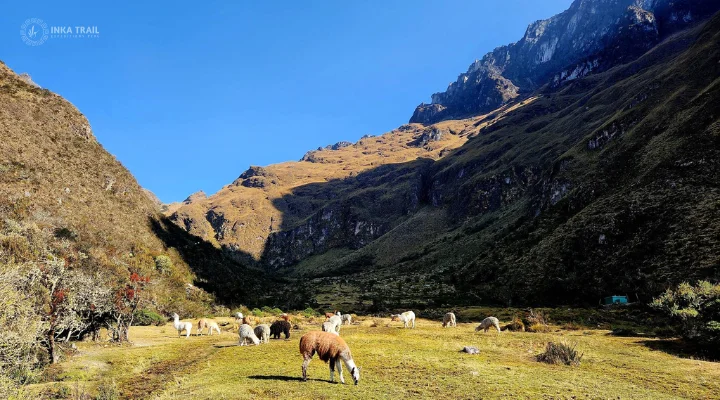
After leaving the cloud forest behind and climbing steadily, the Inca Trail 4 days opens up into Llulluchapampa: a wide meadow framed by Andean peaks that serves as the last big breather before the final push to Warmiwañusca, the highest point on the entire route. Few places on Day 2 offer such a sharp contrast between the effort of the climb and the calm of the landscape.
What Is Llulluchapampa?
The name Llulluchapampa combines "llullucha," a type of aquatic plant typical of Andean waterways that also gives its name to the Llulluchayoc river and valley, with "pampa," Quechua for plain or meadow. The result describes exactly what you'll find here: a wide high-altitude flat, a visual and physical break after a steady climb through the forest.
On the classic 4-day Inca Trail, Llulluchapampa usually serves as a lunch or rest stop before the final stretch toward the Warmiwañusca pass. On some slower 5-day itineraries, this same spot becomes a full campsite, taking advantage of its privileged views and quieter setting.
The Climb to Get Here
Reaching Llulluchapampa means leaving the Ayapata ravine behind and entering a stretch of humid forest, where the sound of clear mountain streams accompanies much of the walk. It's common to spot the giant hummingbird in this area, one of the most striking local species, while the vegetation grows increasingly Andean as elevation increases.
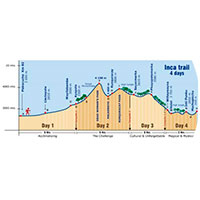
The climb is demanding but gradual, and serves as direct preparation for the bigger effort still ahead: the final ascent to Warmiwañusca, at 4,215 meters (13,828 ft) above sea level.
A Natural Viewpoint Before the Big Pass
What sets Llulluchapampa apart from other points on the route is its openness. After hours walking through forests and narrow trails, the meadow opens up completely, revealing panoramic views of the peaks surrounding the valley, including the striking Huayanay mountain. Many trekkers describe this spot as one of the most photogenic on Day 2, and it's no coincidence that several agencies choose to pitch camp here on slower versions of the trek — precisely to take advantage of this view at sunrise and sunset.
Getting Ready for Warmiwañusca
From Llulluchapampa, the trail continues climbing for roughly two to two and a half hours until reaching the Warmiwañusca pass, popularly known as "Dead Woman's Pass." This is, without question, the most demanding stretch of the entire Inca Trail, and Llulluchapampa serves as the last logical point to refuel, hydrate, and get mentally ready before the final push.
Location and How to Get There
Llulluchapampa sits in the Llulluchayoc River valley, between the Wayllabamba or Ayapata campsites and the Warmiwañusca pass, along Day 2 of the classic Inca Trail. There's no vehicle access: it can only be reached on foot, as part of the climb connecting the first and second halves of the route.
Reference location of Llulluchapampa, Llulluchayoc River valley, Cusco.
Why This Stop Is Worth Savoring
It's easy for Llulluchapampa to get overlooked between two more talked-about moments of the Inca Trail: leaving Wayllabamba and reaching the top of Warmiwañusca. But stopping here, even just for a few minutes, to take in the width of the meadow and catch your breath before the final stretch, is one of those pauses that defines the rhythm of a good high-altitude trek.
Other Stops Near Llulluchapampa
Ayapata
The high-altitude campsite where many groups spend the first night, roughly 1.5 hours before reaching Llulluchapampa.
Warmiwañusca (Dead Woman's Pass)
The highest point on the Inca Trail, at 4,215 m (13,828 ft), the final goal after leaving Llulluchapampa behind.
Pacaymayo
The highest-elevation campsite on the route, reached after crossing Warmiwañusca on the descent.
Catch Your Breath at Llulluchapampa Before Climbing to Warmiwañusca
This meadow is the last big pause before the most demanding challenge of the Inca Trail. Check out the full itinerary, available dates, and everything included in our classic Inca Trail tour.