Wiñaywayna: The Last Campsite Before Machu Picchu
Just a few kilometers from the finish line, the Inca Trail 4 days reaches Wiñaywayna: the third and final campsite of the trek, set right next to one of the most complete and impressive citadels on the entire route. For most trekkers, this is the last night before waking up before dawn to head toward Machu Picchu.
What Does Wiñaywayna Mean?
The name "Wiñaywayna" (also spelled Wiñay Wayna) comes from Quechua and translates to "always young" or "forever young." The name refers both to the site's enduring beauty and to the abundance of orchids that bloom year-round in the area, one of the most notable features of the landscape surrounding the campsite and citadel.
Wiñaywayna was rediscovered during the 20th century, though sources differ on the exact date: some link it to Hiram Bingham's 1911 expeditions, while others place its actual rediscovery around the 1940s, noting it didn't receive much attention until years later.
A Religious and Agricultural Citadel
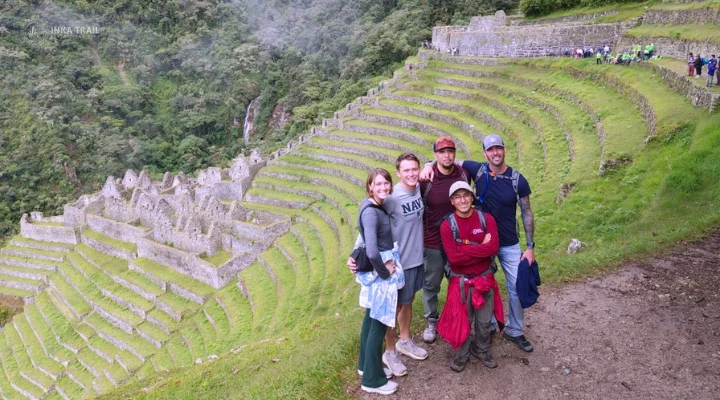
Wiñaywayna was an important religious and agricultural center within the Inca system. Like neighboring Intipata, it was part of a broader state project aimed at expanding agricultural production along the eastern flank of the Andes, making use of the mountain's slope through an extensive terrace system.
The site is organized into upper and lower sectors connected by stone staircases, featuring notable structures such as the Inca's House, the Tower, and a set of water fountains used in purification rituals. These fountains, tied to the water cult found throughout the Inca Trail, are spread across a sloped section running through much of the complex.
Forty Concentric Terraces
One of Wiñaywayna's most admired features is its set of roughly 40 agricultural terraces, built concentrically to follow the natural curve of the hillside. This design not only maximized the cultivable area on rugged terrain, but also gives the site a particularly harmonious look when viewed from nearby lookout points or from the Inca Trail itself.
The Last Night of Camping
Arriving at Wiñaywayna marks the end of the third and second-to-last day of walking. Most groups use the afternoon to rest, check their gear, and prepare for the early morning ahead, since the campsite sits right at the foot of a final checkpoint that usually opens between 5:00 and 5:30 a.m. From here, after passing the checkpoint, only a couple of hours of walking remain — including the final stretch toward Intipunku, the Sun Gate — before reaching Machu Picchu, ideally in time to watch the sunrise over the citadel.
Many trekkers agree this last night has a special character: a mix of accumulated tiredness, anticipation, and the certainty that the next day, they'll finally see Machu Picchu.
Location and How to Get There
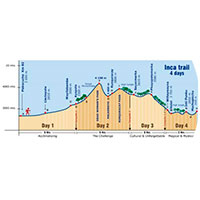
Wiñaywayna sits on the left bank of the Urubamba River, within the Machu Picchu Historic Sanctuary, between the sites of Phuyupatamarca and Intipunku. There's no vehicle access: it can only be reached on foot, as part of Day 3 of the classic Inca Trail, after the descent from Phuyupatamarca.
Reference location of Wiñaywayna, Machu Picchu Historic Sanctuary, Cusco.
Other Stops Near Wiñaywayna
Phuyupatamarca
The "town above the clouds," visited during the previous afternoon, before the descent to Wiñaywayna.
Intipata
The large neighboring agricultural terraces, part of the same Inca farming project as Wiñaywayna.
Intipunku
The Sun Gate, the final entry point into Machu Picchu after leaving Wiñaywayna.
Spend Your Last Night at Wiñaywayna, One Step From Machu Picchu
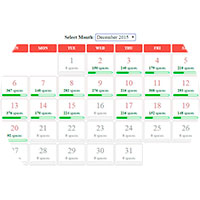
Wiñaywayna is the perfect close before the most anticipated sunrise on the Inca Trail. Check out the full itinerary, available dates, and everything included in our classic Inca Trail tour.